Welcome to Classroom Perspectives on AI, a new newsletter from PEBC exploring how educators are leading and learning with AI in their classrooms and practices. For this inaugural issue, I wanted to introduce myself, why we’ve decided to launch this project, and share a little bit more about what we are thinking and planning.
My name is Evan, I’ve worked at the intersection of policy and social impact at PEBC for the past decade. Something that I have long appreciated about our organization is how our work grounds itself in classrooms and what is happening in them each and every day - and what teachers are doing to cultivate communities where all learners feel a sense of belonging and purpose.
With AI’s increasing push into K-12, I’ve been doing a lot of reflecting on how we can better understand what it means to teach right now in the midst of this technological shift.
- What do teachers think about how AI is impacting their classrooms?
- What’s working, and what isn’t?
- What do teachers need to be supported in becoming savvy, questioning users of AI who can effectively incorporate it to support their instructional practices?
PEBC believes in elevating the perspectives of educators so that their voices inform the decisions being made at the systems and policy levels. This newsletter, along with some additional initiatives that we’re excited to share with you, represents one portion of our efforts this year to show how teachers are leading, not just reacting to, AI’s increasing influence in our classrooms - what that means for our teachers and kids now, and what it could mean for the future if we center those voices in our decision-making.
Why a newsletter? And why now?
While we can’t tell the whole story in a humble newsletter, there are a few key elements we can start with:
We know that AI companies, most recently Anthropic, have rolled out AI tools for K-12 teachers that they really, really want teachers to use (fear not, we’ll get into the positives and not-so-positives of this).
And, while polling indicates that a majority of teachers are using AI, far fewer report receiving any formal guidance on AI use. That’s a gap that we need to understand better and help teachers have the support they need.
We know that states, including Colorado, have produced roadmaps and resources designed to support AI adoption and implementation - and we assume/expect to see a lot more of this.
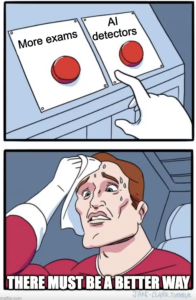
From a research perspective, we know that there is an emerging consensus across the sector to identify the ways to both mitigatethe risks and lean into the benefits of generative AI, especially when early studies have shown how negative those impacts can be - especially for new teachers, and when AI is used without guardrails.
We’re excited by this work, including some of the uses of AI we’ve observed in PEBC-supported classrooms, and the systems-level networks emerging to support the overall ecosystem. We’ve seen educators - even the most skeptical ones - bring incredible thoughtfulness to this issue. And we know that this is just a snapshot of what’s happening.
At the same time, we also know that, well, there’s all this other stuff - the increasingly hostile public sentiment about AI, and multiple polls demonstrating that as AI use grows, users (especially younger ones) become more skeptical of its value.
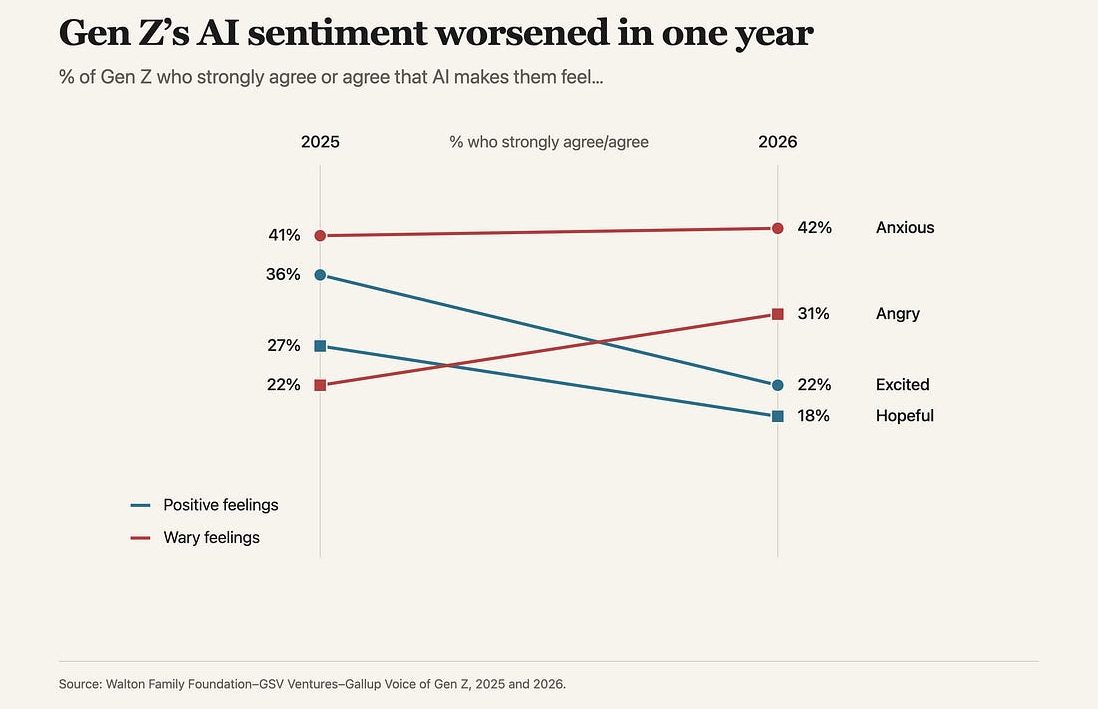
Another recent poll found 55% of teachers opposed to using AI in the classroom. Layer in a growing “techlash” gaining momentum among families and educators alike, and you can feel the tension all around us. (Anyone remember those college commencement speakers who were drowned out by raucous boos for praising AI too much? We do too!). That’s a lot of pushback, it’s growing, and it’s real.
So, where does this leave us?
A big part of our purpose here is to engage with the (potential) usefulness of AI when utilized properly by educators, while being clear-eyed about its (very real) flaws and limitations. How are teachers managing all of this right now? What does that feel like, and what can we learn from them?
With that in mind, we’re planning to use this newsletter this school year to tell some of these stories, talking to teachers around Colorado in all sorts of different contexts.
Here’s what you can expect
 Conversations with educators about AI and its impact in their classrooms and how they work - we want to explore questions such as How is AI augmenting (not replacing) what you do in the classroom? See below for more about who we’re talking to and how to be a part of the conversation.
 Findings from some field research we’re leading - we are actively surfacing what teachers say are the supports they need to successfully navigate this moment, and we’ll share our findings and recommendations in the coming months
 Fun Stuff - links to interesting books, articles, podcasts, etc from the intersection of AI, K-12, and the world of work. We’ll share a curated set of links to things we find interesting in each edition
Our commitment to you, the reader
There is a wide range of perspectives on teacher use of AI tools that spans the gamut from positive to (ahem) rather negative - and we’re committed to providing a fair accounting of these perspectives in ways that bring the various views to the table.
Our goal is to make this newsletter approachable to the educator and non-educator - we’ll go light on the jargon.
Last - and most importantly: we won’t write a single word of this with AI. I’ll happily take the blame for typos and mistakes, and also take credit for all of the clever sentences and jokes that a computer could never produce.
If we do use AI in any way (say, to help with transcribing interviews), we will name the ways in which it was used.
How to get involved
I’m so glad you asked.
Are you an educator who wants to share more about how AI is showing up in your classroom, and what support you need? We’re building out a needs assessment that will go live in September, and we’ll share that link out when it’s ready (sign up for the newsletter so you don’t miss it!)
Do you have a perspective on AI in classrooms that you think would be a good fit to be featured in this newsletter? Feel free to email me. You don’t need to be an expert user - most of us aren’t! - and I’d love to talk to a wide range of adopters, grade levels, and experiences this year.
You’ve seen a taste of what we have been reading and thinking about in the links provided above. Who else should we be reading, listening to, connecting with? My inbox is open, send me what you’ve been paying attention to so I can add it to my list.
Thanks for joining us on this journey and discussion, and don't miss the next issue coming out soon!
